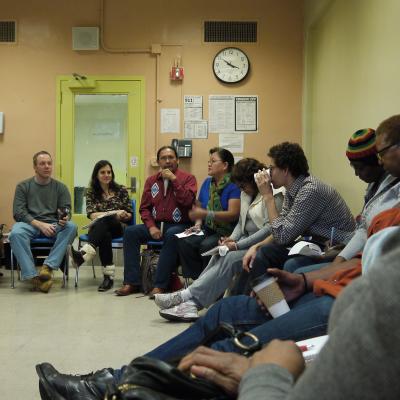
The Center for Justice Innovation’s Tribal Justice Exchange works with tribal communities across the United States to enhance their justice systems in ways that support tribal sovereignty.
The Center’s Tribal Justice Exchange has worked with more than 60 tribes across the country to implement innovative practices within their justice systems. These include prevention initiatives, youth engagement, diversion programs, restorative justice practices, Healing to Wellness Courts, reentry strategies, and other approaches emphasizing healing and community-building.
We offer a range of training and technical assistance services designed to promote tribal sovereignty by expanding tribal court jurisdiction, building collaborations with state and local partners, and developing new resources to support justice-involved tribal members.
The Western, adversarial system of justice often runs counter to the traditional practices of tribal communities. We recognize that approaches that work in state justice systems will not necessarily fit tribes' needs. Our Tribal Justice Exchange works with tribes to incorporate traditional practices and values into tribal justice systems.
Building on a traditional Native American approach to justice, the Center’s peacemaking programs focus on healing and community restoration rather than punishment.
The Muscogee (Creek) Nation Reintegration Program provides intensive case management and reentry services to tribal members returning to the community from incarceration. The program provides financial assistance for basic needs such as housing, clothing, and groceries, and offers long-term support through educational, vocational, and legal services.
Developed with support from the Bureau of Justice Assistance, Planning a Reentry Program: A Toolkit for Tribal Communities is designed to help tribal justice system practitioners create or enhance reentry programs for American Indians and Alaska Natives returning from jail or prison. It also offers guidance for practitioners who are currently working in a reentry program.
Our national survey of tribal justice systems—conducted with partners at the Confederated Salish and Kootenai Tribes—found limited use of risk-need assessment tools, despite the expansion of such tools in other jurisdictions and pressure to increase their use across the country. The survey identified a need to develop risk-need responsivity tools built specifically for tribal justice systems, to validate existing tools with Native populations, and to create affordable tribal-owned technological solutions.
A Q&A with our Tribal Justice Exchange team on respecting tribal sovereignty, the cultural wisdom behind tribal justice, and what they're doing to uplift Native youth.
Native children navigating the child welfare system are uniquely vulnerable. Read about the recent Supreme Court decision that protects their right to stay connected to their families and communities—and the smaller, no less inspiring efforts to support them on the ground.