Harlem Community Justice Center
Overview
The Harlem Community Justice Center seeks to solve neighborhood problems—including youth crime, landlord-tenant disputes, and the challenges faced by parolees—in East and Central Harlem. As a multi-jurisdictional civil and family court, Harlem is unique among community courts. Among the many non-traditional services the Justice Center has assembled under one roof are: programs to help local landlords and tenants resolve conflicts and access financial support; programs for at-risk youth, including a youth court; and reentry programs for both juvenile and adult ex-offenders returning to the community. Ultimately, the project's long-term goal is to test the extent to which a court can work together with a community to spur neighborhood renewal. To read a summary of results from the Harlem Community Justice Center, including caseload and impacts on crime reduction, improved school attendance, and eviction prevention, click here.

Rethinking Reentry is a blog about reducing recidivism and enhancing public safety in Upper Manhattan that is maintained by the Harlem Community Justice Center.
How It Works
The Justice Center has three principal programs:
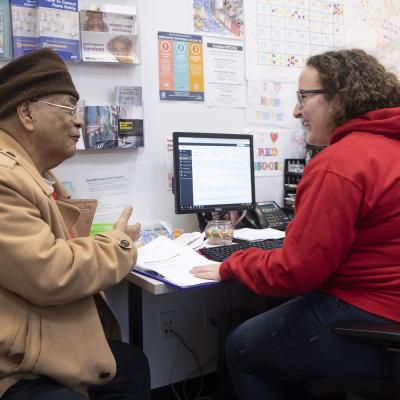
Housing: The Justice Center seeks to resolve housing problems before they get to court. It accomplishes this by linking landlords and tenants to mediation, benefits assistance, social services and loan-assistance programs, as well as classes about the rights and obligations of tenants and landlords, and vocational training in building maintenance. Of course, not all cases can be resolved through the provision of services. When housing conflicts do proceed to court, the Justice Center is well-positioned to resolve cases quickly and meaningfully. The Justice Center judge hears cases involving non-payment issues, nuisance complaints and the failure to make necessary building repairs. With the help of a customized computer system, the judge can access information about each case with the click of a mouse. And the Justice Center's community setting encourages the judge to develop an understanding of the neighborhood's hot spots and eyesores. The result is more informed decision making.
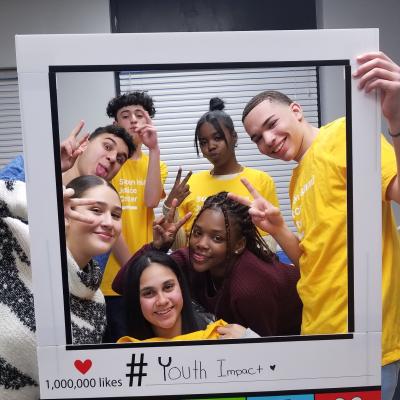
Youth Justice: The Justice Center works intensively with young people at the first signs of delinquent behavior, giving them the help they need to avoid further offending. The Justice Center courtroom handles cases involving young people apprehended for non-violent drug and property offenses, linking participants to services like drug treatment, counseling and education. Compliance is rigorously monitored by the judge, who requires participants to come back to court frequently to report on their progress. The judge also has the option of sending young people to youth court, where cases are presided over by a true jury of peers—other young people from the neighborhood trained to serve as judges, lawyers and jurors. The youth court, which also hears cases like truancy and schoolyard fights referred directly by police, encourages young people to take responsibility for their actions. Sanctions include community service, anger-management classes and letters of apology. Other youth programs available at the Justice Center include community service, parent-teen mediation, family counseling, mentoring, leadership development and career training. Each year, more than 300 young people participate in programs at the Justice Center.
Reentry: The Justice Center encourages both adult parolees and juveniles returning from state placement to become productive, law-abiding citizens. Parolees are linked to drug treatment and jobs and receive help reconnecting with their families. They are also required to appear before an administrative law judge on a regular basis to demonstrate compliance with both treatment mandates and parole conditions. Similarly, young people (and their parents) are linked to intensive services and participate in bi-monthly court appearances before a hearing officer to review progress in meeting established behavioral and program goals. Evaluators have documented that the Justice Center's reentry court has reduced re-offending among participants by 19 percent.
Partners
The Harlem Community Justice Center is the product of a unique public-private partnership that has engaged all levels of government—county, city, state, and federal. Among the funders of the Harlem Community Justice Center are the New York City Council, Substance Abuse and Mental Health Services, J.C. Flowers, Lily Auchincloss Foundation, Hyde and Watson Foundation, New York State Department of Corrections and Community Supervision, New York City Department of Youth and Community Development, Robin Hood Foundation, New York State Division of Criminal Justice Services, and U.S. Department of Justice Office of Juvenile Justice and Delinquency Prevention. A variety of local agencies assist in providing services, including: the Center for Employment Opportunities, Palladia Inc., Workforce 1, Harlem Neighborhood Defender Services, New York Peace Institute, New York City Department of Probation, New York City Department of Youth and Community Development, Exodus Transitional Community, New York County District Attorney's Office, the Fortune Society, Harlem East Life Plan (H.E.L.P.), New York City Department of Education, New York Police Department, New York City Housing Authority, and New York State Office of Court Administration.

Project List
-
Manhattan District Attorney Cy Vance Jr. speaks at a graduation of the Harlem Parole Reentry Court.
Featured Research
Harlem Community Justice Center Blog
-
May 17, 2012
Harlem Reentry Graduates!
Please join us at the Harlem Community Justice Center to celebrate the 36 men and women who will be graduating from the Harlem Parole...
Read More -
May 15, 2012
Scotty Scott's Murderer Sentenced
The murder of an innocent bystander, thirteen year old Scotty Scott, in 2008 was yet another sign of growing gun violence in Harlem. The...
Read More -
May 7, 2012
Sentencing for Black Teens in Homicides Where Victim Was White
A recent report by The Sentencing Project, entitled "Lives of Juvenile Lifers: Findings from a National Survey” found that African...
Read More